Field · Building

Parts that have to fit

Two competition airframes a season apart, an aircraft engine with the cowling off, the engines the notes are about, and a chassis that was welded before anybody drove it.

A piston aircraft engine on the ramp with its cowling removed, one cylinder off and the exhaust and baffling exposed.
An aircraft engine with the cowling off and a cylinder out.
01

What comes off, and what is under it

Aircraft and car engines, on the same bench

Find out what it is before replacing anything. On an aircraft engine that means the cowling comes off before an opinion is offered; on an N54 it means the housing comes off the block and the failed part gets looked at rather than binned. The pair below is one job.

A BMW N54 oil filter housing removed from the engine and set on a workbench, its sealing face upward.
The housing, off the block. An oil filter housing is a lid over a cartridge and a manifold for the oil cooler lines, and it seals to the block on one long profile gasket.
The old profile gasket from the housing laid on a shop towel, black with oil and set hard, with a pick beside it.
The gasket that came out of it. Set hard and oil-black. This is the part the whole job exists for, and it is a two-dollar item behind a half-day of access.
Two photographs of the same BMW engine bay stacked one above the other: the factory airbox and ducting in the upper frame, an open cone filter in the same position in the lower one.
One engine bay, two intakes. The factory airbox above and what replaced it below, shot from the same place so the only thing that changes between the frames is the part.
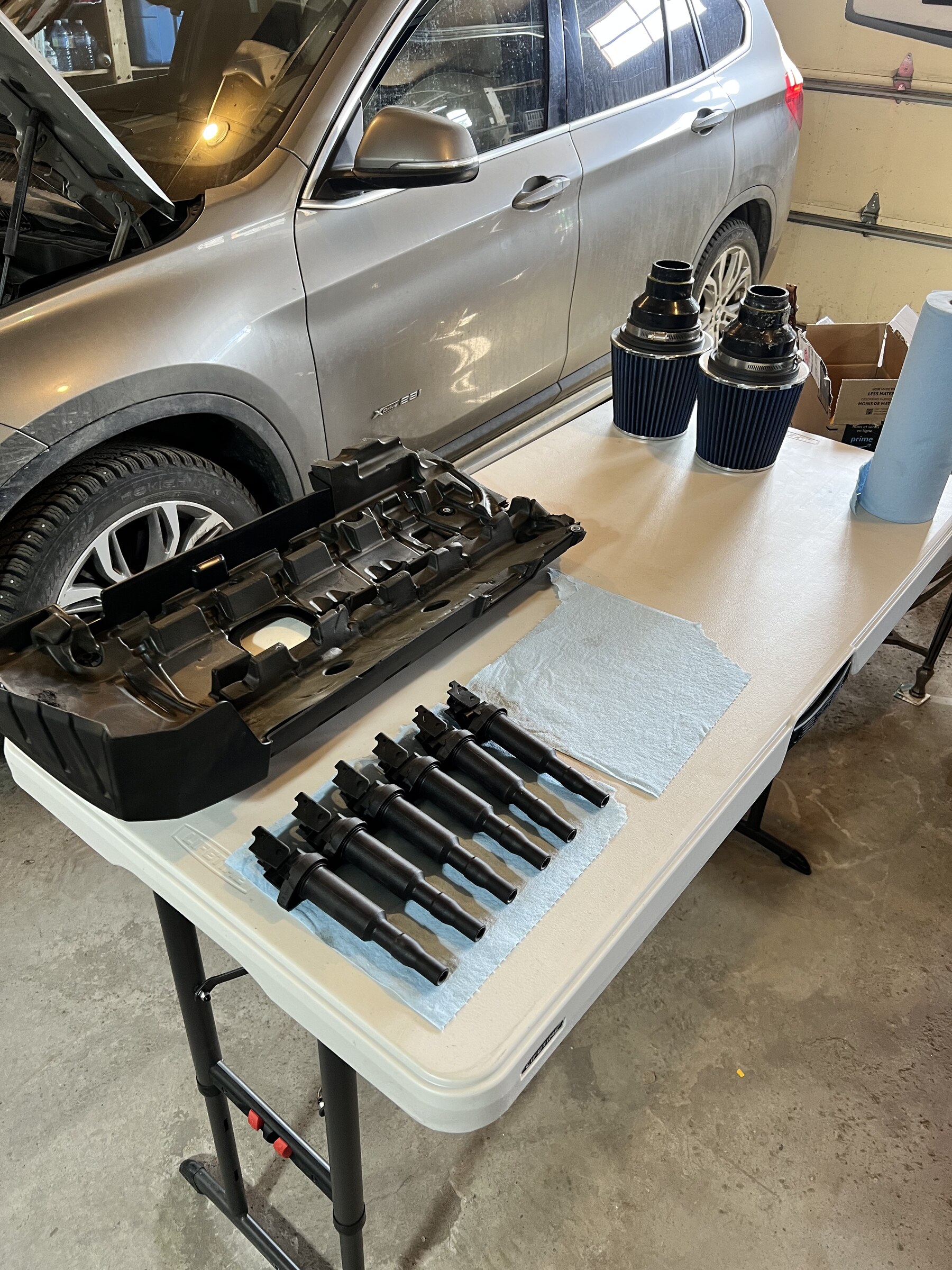
An engine cover and six ignition coils laid out in order on a folding table, two cone air filters beside them, and a car with its bonnet up behind.
A whole ignition, laid out in order. Coils and plugs replaced in one pass rather than chased one cylinder at a time, so the next misfire starts from a known-good baseline.
A VANOS solenoid from a BMW inline six lying on a shop rag, its filter screen and electrical connector visible.
A VANOS solenoid, out. The valve that meters oil to the cam phasers. It is a filter and a spool in a body, and when it stops moving cleanly the engine reports a timing fault rather than an oil fault.
A tailwheel aircraft with its engine partly exposed, propeller forward, on grass.
The other kind of engine, on display. On an aircraft engine the work is logged, signed and inspected, which a car does not impose on you.

The notes these jobs belong to →

02

Two airframes, a season apart

UT-24 Minerva and UT-25 Stratus

Two years on the University of Toronto Aerospace Team's SAE Aero Design team, on wing aerodynamics both times. Minerva flew at Aero Design West in 2024 and Stratus at Aero Design East in 2025, and both took first place in the Advanced Class design report.

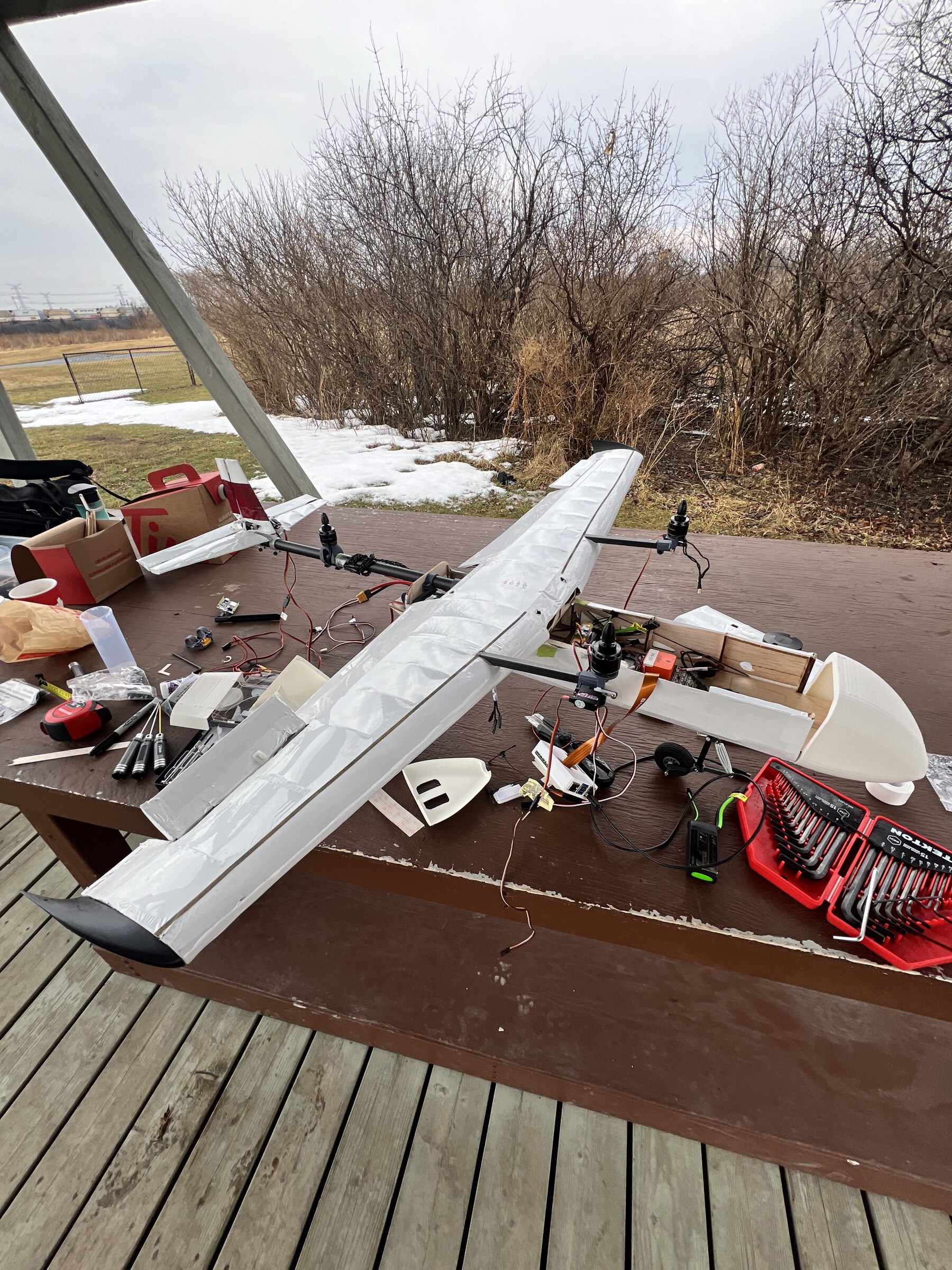
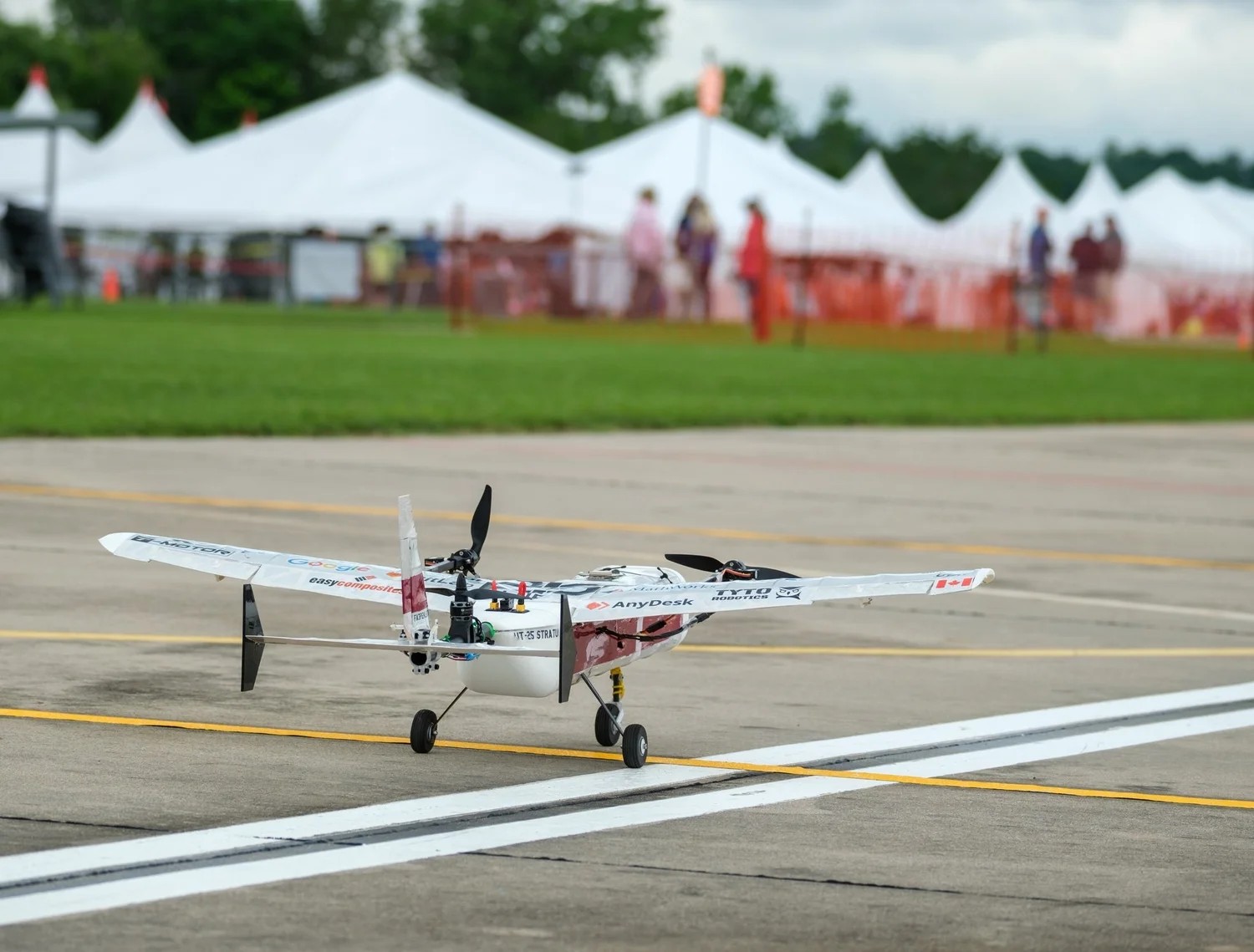
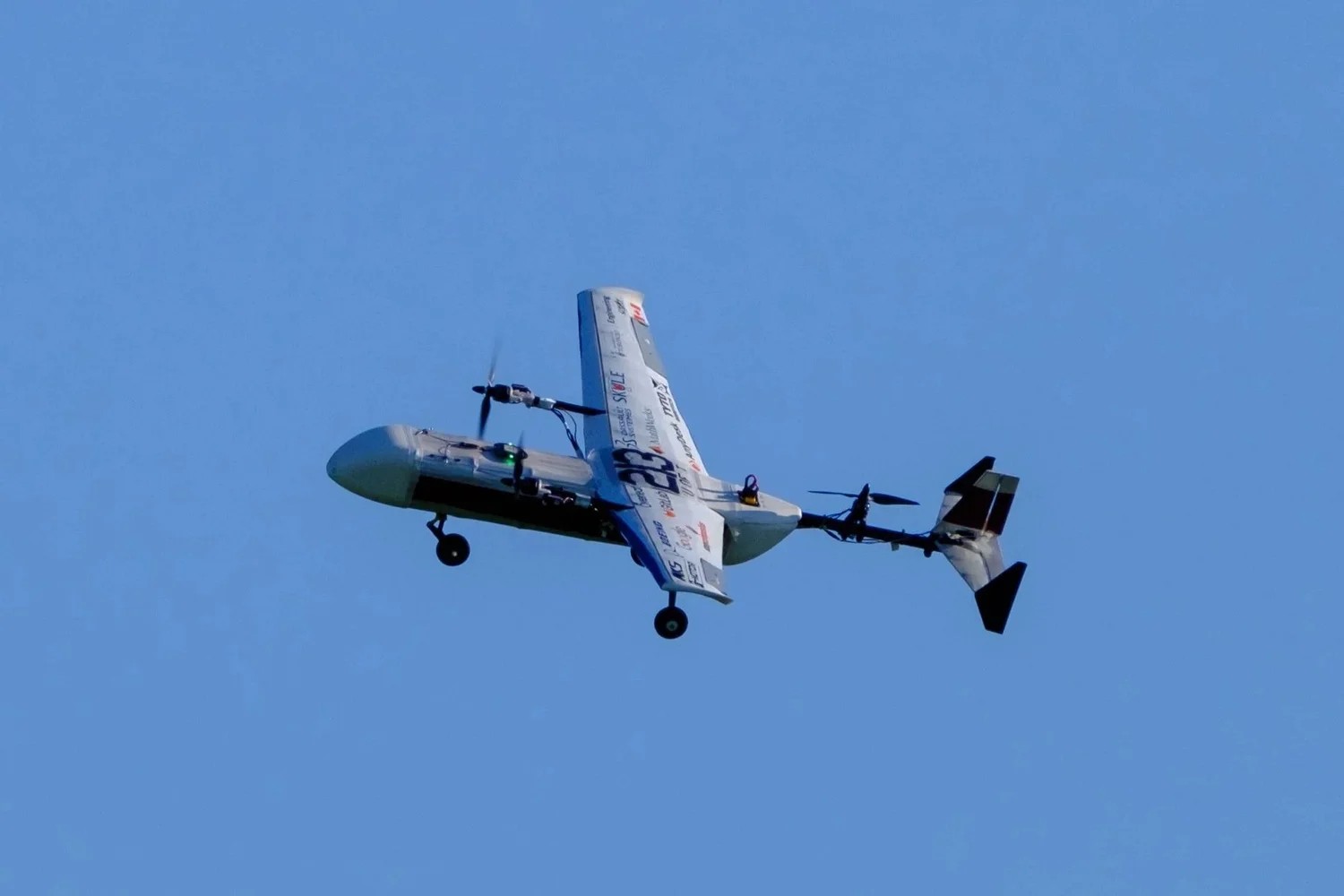
The finished Stratus wing on a lab bench: constant chord inboard, tapering outboard, two carbon spar stubs at the root. The airframe part-assembled on a picnic table at a flying field in late winter, tools and parts laid out beside it. UT-25 Stratus standing on a taxiway at competition, two motors on the wing and sponsor decals across it. Stratus airborne against clear sky seen from below, the number 213 legible on the underside of the wing.
One airframe, in the order it happened. The wing in the first frame is the chord distribution the optimiser chose, built as a stack of laser-cut ribs over a carbon spar; by the fourth it is holding the aeroplane up. Nothing between those two states is in the loop that sized it.
The Stratus wing part-built on a bench: ribs threaded onto the spar, the leading edge not yet closed.
Ribs on the spar. Laser-cut ribs threaded onto the carbon spar, the leading edge not yet closed.
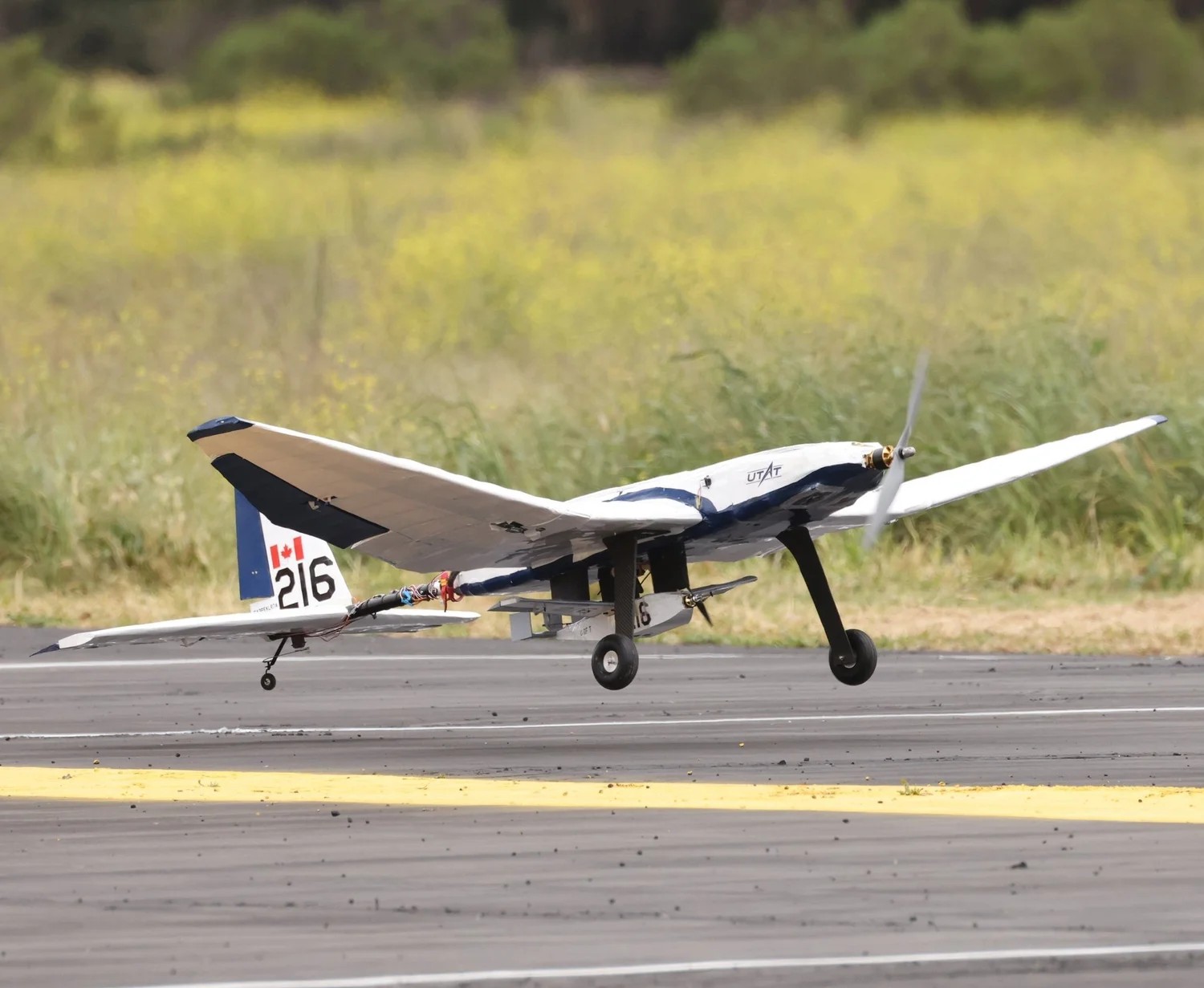
UT-24 Minerva rolling on a runway with tall grass behind it, a second much smaller airframe on its own wheel in the same frame.
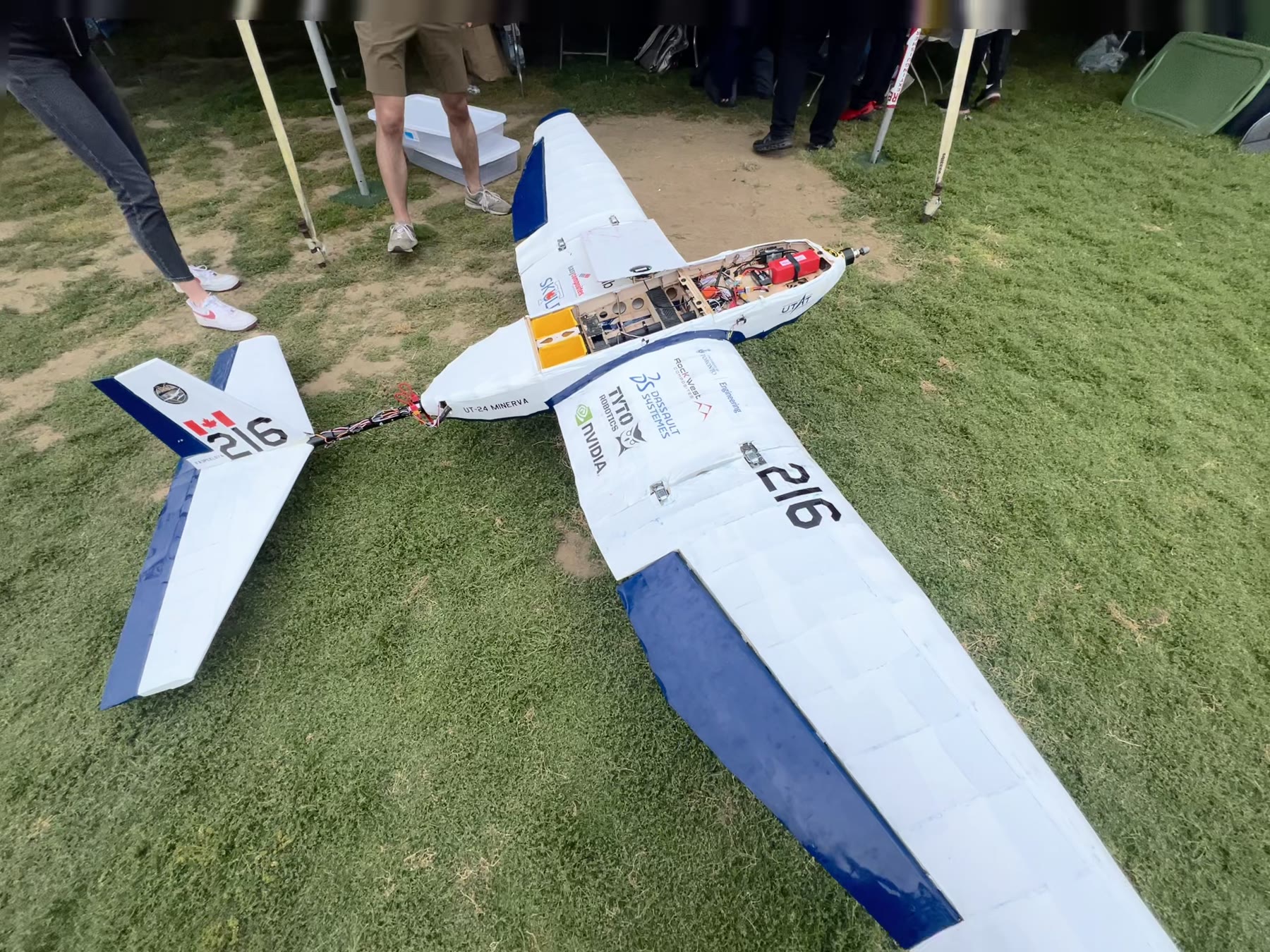
Minerva, the season before. On the runway at Aero Design West with one of the gliders it carries in the same frame, marked with the same competition number 216. Photographed by the team.
Minerva on grass at tech inspection, tail assembly detached and the equipment bay open.
Tech inspection. Tail off and the bay open for the inspector. An aircraft only gets a score after someone with a checklist agrees it is the aircraft that was declared.
An SAE Aero Design West 2024 plaque held in one hand, reading first place, advanced class, written design report.
What the report was worth. First place, Advanced Class, written design report, Aero Design West 2024. Stratus took the Design Report Award at Aero Design East the following year.

Whose work

  • Structures and manufacturing on these airframes were led by two other members; my part was the wing aerodynamics.

The optimisation that sized the wing →

03

Drawn, not built

SBach 342, an outer mould line exercise

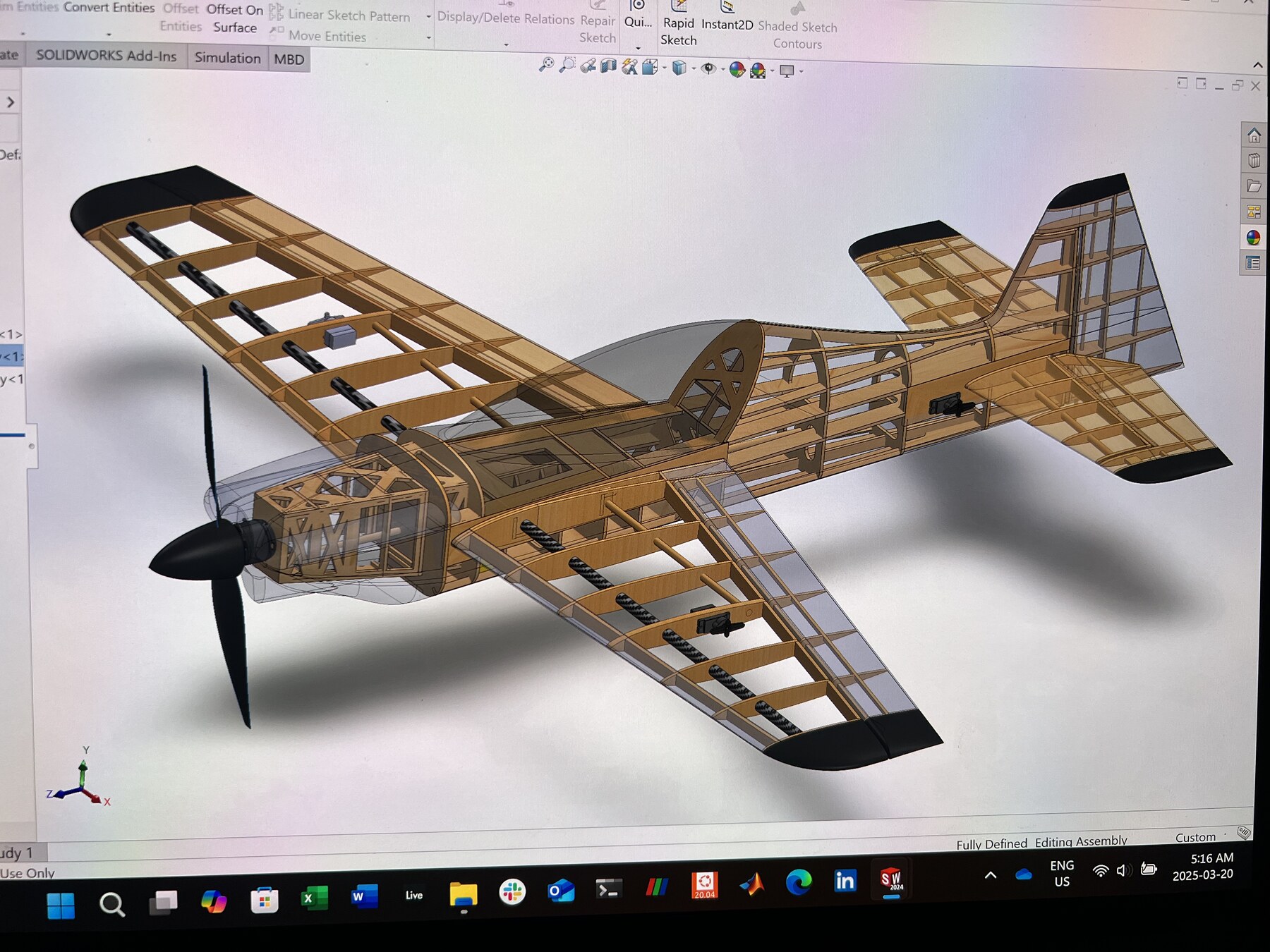
A full aerobatic airframe drawn as a geometry exercise: outer mould line, spar and rib layout, servo tray, skin. A CAD assembly, never cut and never analysed.

A screen showing the SBach 342 assembly in CAD with the wing skin cut away over the spar and ribs.
The assembly, on the screen it was drawn on. Skin cut away over the spar and the rib stack.
Top planform view of the SBach 342 in CAD.
Planform. Symmetric section, near-constant chord, big control surfaces: the shape of an aeroplane meant to be flown on the limits rather than efficiently.
The SBach 342 internal structure complete in CAD: full rib stack, spars and formers, skin hidden.
Structure, skin hidden. Every former and rib in place. This is the state a build would start from, and the state it stopped at.
Side profile of the SBach 342 in CAD with the servo tray visible.
Side profile. The servo tray is drawn in, which is the point at which a shape exercise starts having to be an aeroplane.
04

Welded, meshed, and handed over

Two things built at Western

A solar-car chassis and a topology-optimised bracket. One is a structure somebody had to weld, and the other is a structure an optimiser drew that somebody would then have to make.
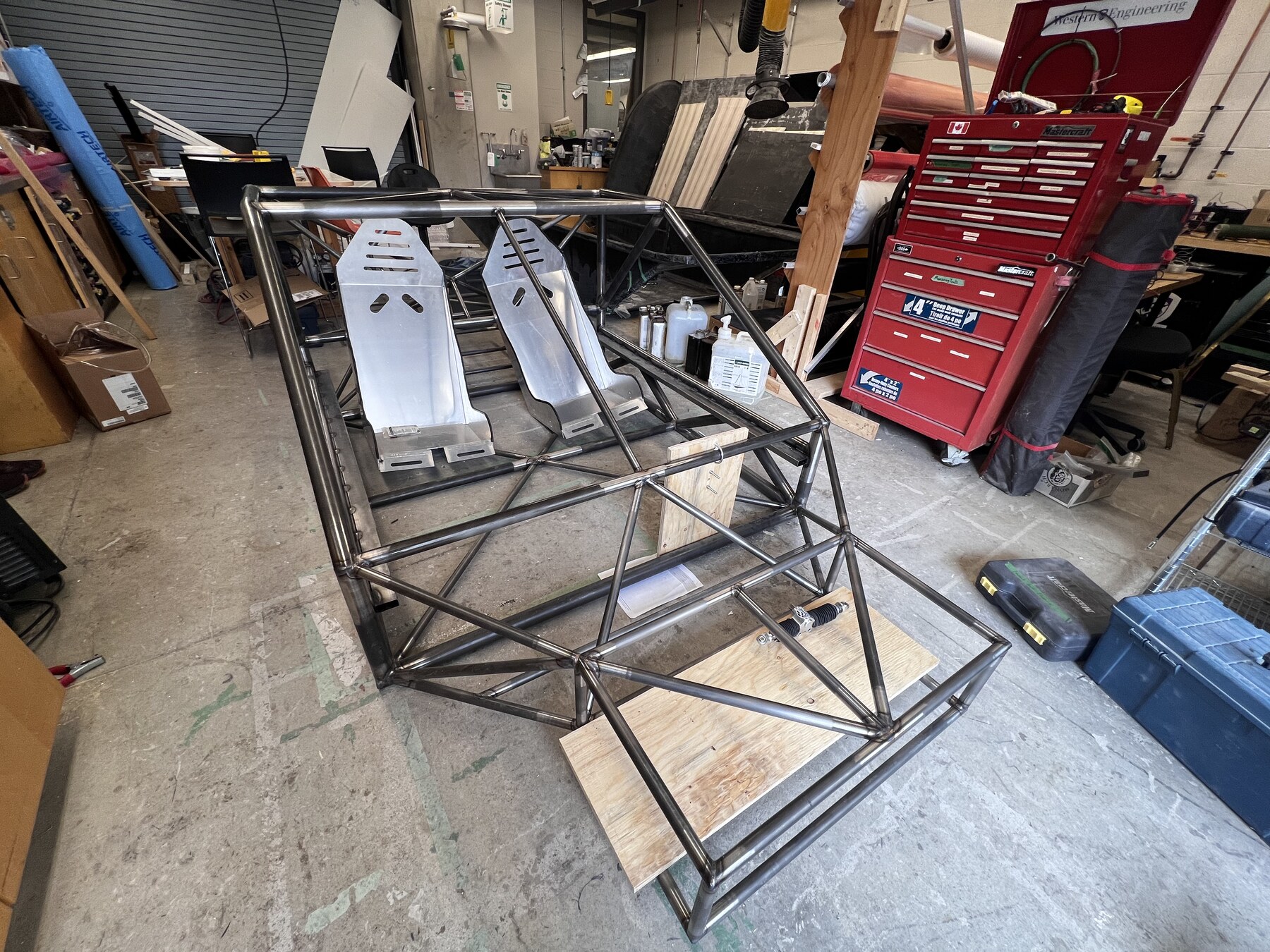
A bare welded tubular chassis frame on a shop floor with seat pans mounted, a red rolling toolbox and workbenches behind it.
Sunstang chassis, in frame. Western's solar car, redesigned tubular chassis with the seat pans in. The finite-element work behind it is the reason the tube sizes are what they are; the welding is the reason it exists.
A screen showing a topology-optimised bracket in Altair: a faceted three-armed structure with four bolt holes, material removed everywhere the load path does not need it, with the solver's own toolbar along the top.
A topology result, on the screen it came out on. Three arms, four bolt holes, and material left only where the load path needs it. What the solver hands over is a faceted mesh rather than a part, and turning one into the other is its own problem.